Ship Governed AI Features Faster by Skipping Stack Assembly
Your AI Roadmap Is Stalled on Stack Assembly
Every engineering leader shipping AI knows the pattern. A first feature is scoped for six weeks. Six months later, the feature is still stuck in integration, governance review, or production hardening.
The problem usually is not the model. The problem is stack assembly.
To get one AI feature into production, most teams have to assemble five layers across multiple owners: connected business data, reusable context, governed tool access, orchestration, and an agent harness that holds under real load. Each layer becomes a separate ticket, a separate dependency, and a separate delay.
The bottleneck has moved. It is no longer model access. It is an operational assembly.

The MuleSoft 2026 Connectivity Benchmark Report, based on 1,050 IT leaders globally, puts numbers to what engineering teams already feel: 95% of organizations report integration challenges blocking AI progress, and only 27% of enterprise applications are currently connected. Half of all AI agents operate in isolated silos rather than as part of a cohesive system. And 86% of IT leaders warn that without proper integration, AI agents add more complexity than value.
The ambition is real. The readiness is not.
Why More Engineering Headcount Does Not Fix It
Adding ML engineers to a broken delivery sequence does not compress timelines. It adds people to an assembly line that is already fragmented.
This is the real leadership mistake: treating every AI feature like a greenfield infrastructure project. Each new feature triggers the same rebuild cycle. Data pipelines. Context assembly. Access controls. Orchestration wiring. Governance sign-off. The team is not building a product. It is rebuilding the foundation.
The MuleSoft data shows the operational cost directly: IT teams now spend an average of 36% of their time designing, building, and testing custom integrations between systems. That is more than a third of engineering capacity consumed before a single line of feature logic is written.
The faster teams made a different call. They separated what is proprietary from what is not:
Own: Product logic, domain workflows, customer-facing experience, and the differentiated reasoning that makes the product worth paying for
Rent: Connector infrastructure, context assembly, orchestration, governance controls, agent scaffolding, and monitoring
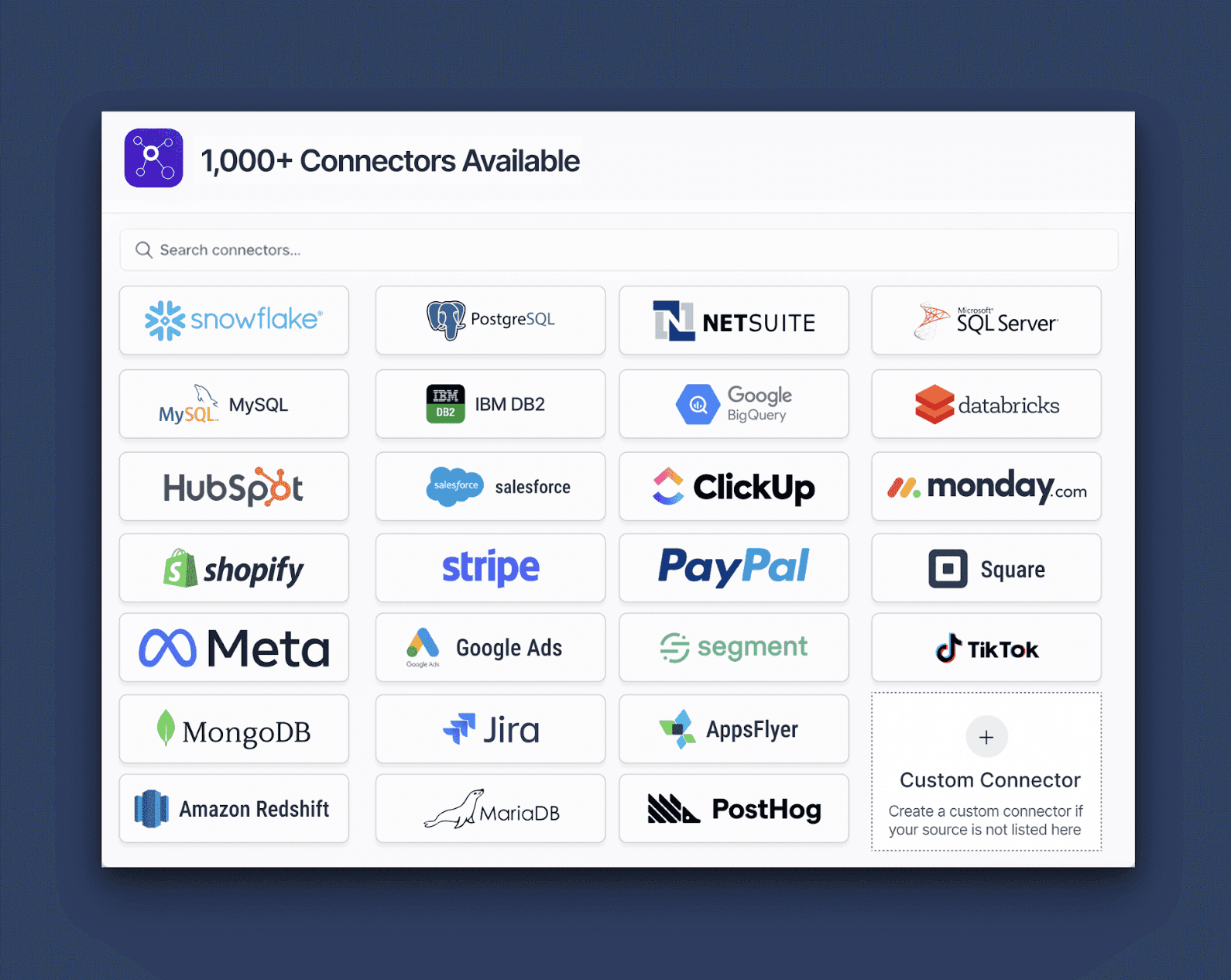
That is where the market has already moved. Menlo Ventures' 2025 State of Generative AI report found that 76% of enterprise AI use cases are now bought rather than built from scratch. The pattern is rational. Rebuilding undifferentiated infrastructure is a velocity tax, not an engineering investment.
The Sequencing Mistake That Stalls Production
Most teams build the feature first and sort out the data layer later. That sequence fails almost every time.
A governed AI feature follows a different order:
Scope ruthlessly. Pick one use case with a measurable outcome. Resist the temptation to build a platform before proving a feature.
Build the data layer first. Connect sources, govern access, and establish trusted context before writing any agent logic.
Build feature logic on clean context. Agent behavior is only as reliable as the data underneath it.
Launch with monitoring in place. Observability, usefulness scoring, and trust controls are not post-launch additions. They are launch requirements.
Teams that reverse this order spend the back half of the project debugging context problems, patching access controls, and explaining to stakeholders why the demo worked but production did not.
The governance gap is structural, not incidental. The MuleSoft 2026 report found that only 54% of organizations have a centralized governance framework for their agentic capabilities. That means nearly half of teams shipping AI agents are doing so without the controls needed to trust them in production.
NVIDIA's 2026 State of AI confirms the pattern from the other direction: a meaningful share of organizations are still stuck in pilot or assessment because workflows, data, and operational expertise remain constraints, not because the models are insufficient. The bottleneck is readiness, not capability.
Shipping Is the First Milestone. Owning It Is the Second.
This is the part most roadmaps miss entirely.
A feature can be live and still not be operationally owned. We worked with an enterprise SaaS team that had already shipped an AI chatbot against internal knowledge bases. On paper, the roadmap item was complete. In practice, the product team could not answer basic performance questions without filing engineering tickets. They could not measure usefulness, identify content gaps, or improve quality directly inside their own workflow.
That is what a stalled AI roadmap looks like after launch: a shipped feature the business cannot measure, manage, or improve.
The fix was not rebuilding the model. It was adding the operational layer that should have existed from day one:
AI Usefulness Scoring on every conversation, surfaced to the product team directly
Embedded analytics inside the client's own product interface
Content gap reports ranked by impact, turning chatbot quality into a content roadmap the product team owns
The model's structure stayed intact. The operational layer made the feature measurable, manageable, and improvable by the people who own the customer experience. We built it in weeks.
Operational ownership is not a phase two item. It is the difference between a feature that ships and a feature that compounds.
Where This Leaves Engineering Leaders
If every AI feature your team ships requires reassembling data pipelines, context layers, governance controls, and agent scaffolding, your velocity ceiling is the foundation, not the feature.
The teams shipping faster are not winning because they picked a better model. They are winning because they removed the assembly work that kept slowing them down.
DataGOL's AI-ready data platform is the governed layer underneath production AI agents. It connects existing systems through 100+ prebuilt connectors, makes business data AI-ready, and delivers context, orchestration, governance, and the agent harness as one unified system. The infrastructure work that usually consumes the first half of an AI project is absorbed before your team writes a line of feature logic. The context you build for feature one becomes the foundation for every feature after it.
If your roadmap is stuck in cross-team coordination, the question worth answering is: what should your team still be building, and what should already be rented?
Book a demo to diagnose where the AI roadmap is blocked and which infrastructure layers are worth renting versus building.

DataGOL Empowers a SaaS Company to Leapfrog their Competition
Problem
A leading SaaS company faced a common and growing challenge — empowering their customers with meaningful analytics and data autonomy while maintaining control over compliance, sovereignty, and cost.

Author
Ellie Shiffman
Ellie is a communications and marketing professional at DataGOL.


